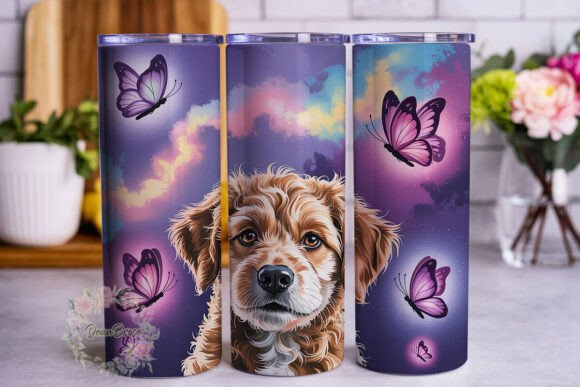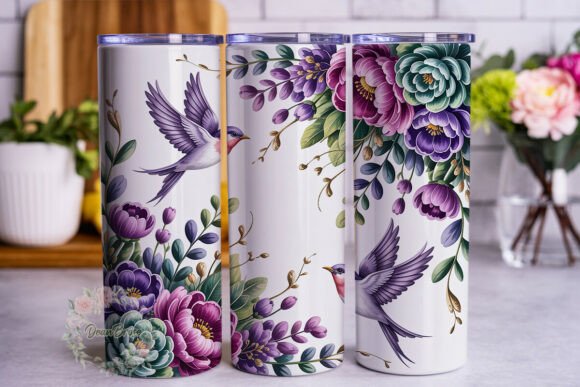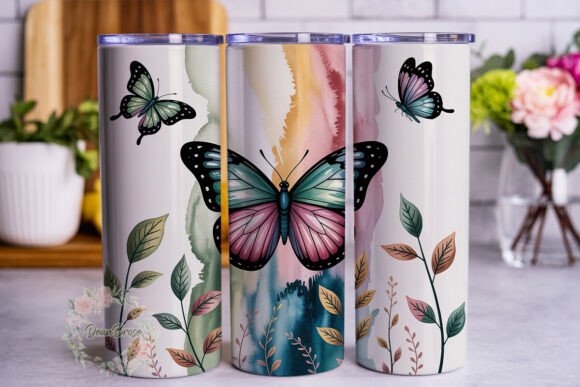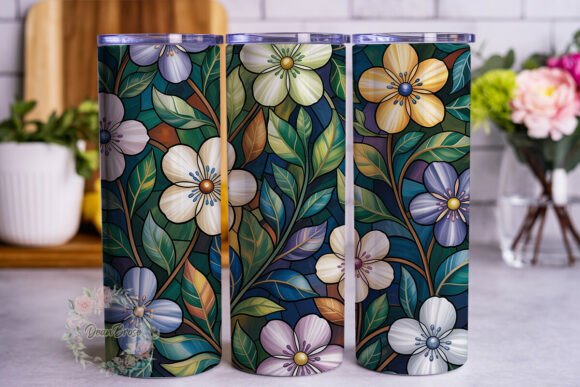
A Initial Butterfly Botanical Tumbler Review
As a designer who spends more time staring at stitch density charts and fabric swatches than sleeping, I approach every new graphic asset with a healthy dose of skepticism. The market is flooded with generic clipart that looks beautiful on a screen but falls apart under the needle. That is why when I came across A Initial Butterfly Botanical Tumbler, I didn’t just look at the preview image; I mentally projected it onto various fabrics, hooped sizes, and end-user products to see if it holds up in the real world.
This review isn’t about marketing fluff. It is a practical evaluation for embroidery designers, small business owners, crafters, Etsy sellers, and handmade shop owners who need to know if this design will translate into a sellable, professional-looking finished product. We are looking at a Tumbler Wraps category item classified as Graphics, specifically provided as high-resolution PNG files for both straight and tapered tumblers. Let’s break down how this design performs when moving from digital file to physical reality.
First Impressions and Visual Mood
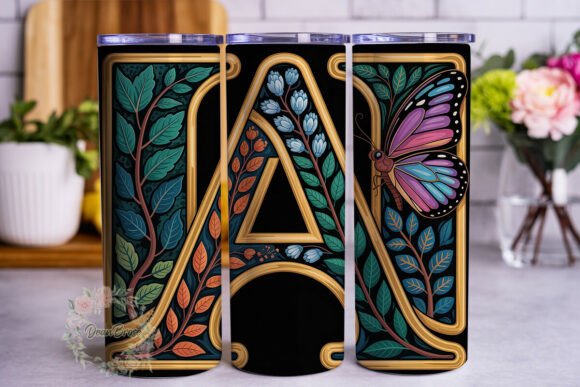
The moment you open the file for A Initial Butterfly Botanical Tumbler, the aesthetic is immediately clear: it leans heavily into the "cottagecore" and botanical elegance trend that has dominated the handmade gift space for the last few years. The layout features a delicate butterfly intertwined with leafy vines, anchored by a prominent initial letter. This combination hits three major psychological triggers for buyers: personalization (the initial), nature-inspired calm (the botanicals), and whimsical charm (the butterfly).
From a design perspective, the balance is well-considered. The negative space around the butterfly wings suggests that the artist understood that embroidery needs breathing room. A common mistake in machine embroidery design is overcrowding the canvas, leading to a muddy, indistinct final product. Here, the elements feel airy. The visual personality is soft yet structured, making it versatile enough for serious boutique branding or casual hobbyist projects. It creates a mood of thoughtful care, which is exactly what customers want when they purchase a personalized gift.
Real-World Application: Where Does This Design Shine?
While the product title specifies tumbler wraps, a savvy Etsy seller or small shop product creator knows that good design assets often have cross-over potential. However, sticking to its primary strength, this design is engineered for vertical surfaces. The dimensions provided—9.3″ x 8.2″—are substantial. This is not a tiny logo; it is a statement piece.
I envision this design performing exceptionally well on insulated stainless steel tumblers, which are currently a staple in craft business inventories. When applied to a straight tumbler, the vertical flow of the botanical vines guides the eye upward, creating a sense of height and elegance. For the tapered version, the curve of the design likely accommodates the narrowing base of the cup, ensuring the artwork doesn’t look distorted or stretched.
But let’s talk about the broader application for those of us in custom apparel and decor. Because this is a high-resolution digital embroidery file concept (delivered as a PNG here, likely for sublimation or heat transfer integration, or perhaps used as a reference for digitizing), the visual clarity is high. If you were to adapt this layout for a sweatshirt embroidery project, placing the butterfly on the left chest and the initial larger on the back, it would create a cohesive brand identity. Similarly, for a tote bag design, the vertical orientation works perfectly down the center seam, offering a sophisticated alternative to the usual horizontal text-heavy bags.
Technical Considerations for Embroidery Success
Here is where the rubber meets the road. As an experienced reviewer, I must highlight that using a graphic like A Initial Butterfly Botanical Tumbler requires technical diligence. Since the product description notes these are PNG files for tumblers, you need to determine your production method carefully. If you are using this for direct embroidery, ensure you have the corresponding digitized file (.dst, .pes, etc.) that matches this visual layout. If you are using the PNG for sublimation printing onto polyester wraps, the 300 DPI resolution is excellent and should yield sharp results.
If you are adapting this concept for actual stitching, pay close attention to stitch density. Botanical designs with fine leaves and butterfly wings can easily become stiff or puffy if the density is too high. You want the stitches to lay flat so the texture of the fabric texture remains visible. I recommend testing the design on scrap fabric first. Check the thread colors against your chosen material. On dark fabric, you may need an underlay or a contrasting thread color to make the white or light-colored botanical elements pop. On light fabric, you might lose definition if the threads are too similar in tone.
Another critical factor is the hoop size. At over 9 inches tall, this design requires a large hoop. Not all home machines support hoops of this size. If you are working with a smaller machine, you may need to split the design or use a multi-hooping technique, which increases production time and the risk of alignment errors. Always confirm your machine’s capabilities before committing to a large-scale order.
Where to Use It Carefully
No design is universal, and A Initial Butterfly Botanical Tumbler has specific constraints. Avoid using this layout on highly textured fabrics like heavy denim or boucle wool without extensive testing; the details of the butterfly will get lost in the weave. Similarly, be cautious with stretchy fabrics unless you are using a heavy-duty stabilizer. Stretch can distort the symmetry of the initial letter and the wings, ruining the professional look.
Do not attempt to scale this design down significantly for small areas like a hat brim or a pocket square. The intricate details of the botanical vines will merge into a blob. This design demands space. It is best suited for larger surface areas such as pillow covers, kitchen towels, or full-front custom apparel. Also, consider the end-user environment. If the finished product will undergo frequent washing, such as a baby onesie or a work apron, ensure the print or stitch is durable. Direct-to-garment prints or certain embroidery threads may fade or fray over time, affecting the longevity of your handmade product.
Impact on Brand and Customer Trust
In the world of commercial embroidery and design assets, presentation is everything. A well-executed design like this one builds customer trust instantly. When a buyer sees a crisp, balanced botanical illustration with a clean initial, they perceive value. They assume the maker took care in the creation process. This perception allows you to command higher prices and reduces return rates caused by "poor quality" complaints.
For Etsy sellers and creative entrepreneurs, this design offers strong brand consistency. The botanical theme is timeless, meaning your inventory won’t look outdated next season. It appeals to a broad demographic, from young mothers buying baby embroidery gifts to professionals seeking stylish drinkware. The inclusion of the initial adds a layer of personalization that drives engagement, as customers love seeing their own name or monogram integrated into artful designs.
Final Verdict for the Maker
A Initial Butterfly Botanical Tumbler is a strong contender for any designer’s library. It balances aesthetic appeal with structural integrity, making it suitable for a wide range of embroidery project types. Whether you are producing limited-edition holiday gifts, expanding your holiday embroidery collection, or adding a touch of elegance to your apron line, this design delivers.
Remember to check the licensing terms before selling finished items or digital products. Ensure you have the correct file format for your production method, whether that involves a specialized applique design technique, precise satin stitch work for the lettering, or efficient fill stitch patterns for the leaves. By doing your due diligence on stabilizer choice and thread colors, you can transform this graphic into a stunning finished product that stands out in a crowded marketplace. It is a reliable, attractive, and commercially viable asset for the serious maker.