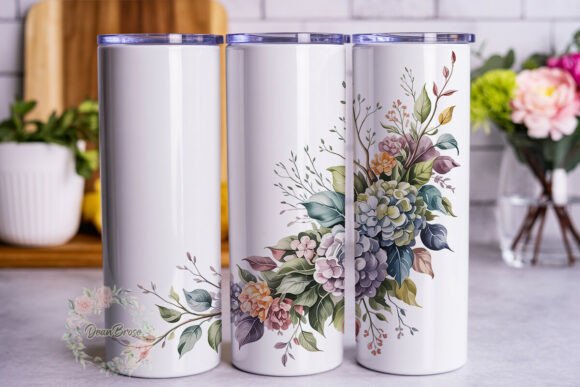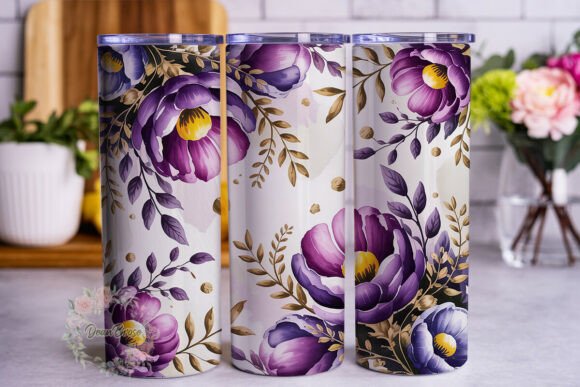
Watercolor Deer Floral 20oz Tumbler Wrap Review
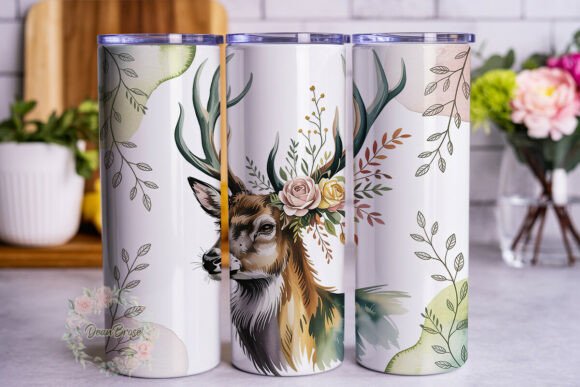
When I first opened the folder for the Watercolor Deer Floral 20oz Tumbler Wrap, my initial reaction wasn't about the file size or the DPI. It was about the mood. As a designer who spends hours evaluating digital assets before they ever hit an embroidery machine, I look for that specific spark—a design that feels ready to be worn, carried, or gifted. This graphic immediately evokes a sense of rustic elegance mixed with modern whimsy. The watercolor aesthetic suggests softness and fluidity, which is a fascinating challenge when translating a digital image into tangible thread.
The product description confirms you are getting two distinct PNG files: one tailored for straight tumblers and another optimized for tapered ones. With dimensions of 9.3 inches by 8.2 inches, this isn't a small accent; it is a statement piece designed to dominate the surface of a drinkware item. However, as someone who has seen too many beautiful designs fail because they were applied without considering the physical limitations of stitching, I need to dig deeper than just the visual appeal. Does this design actually work for real-world production? Let's walk through how I would approach using this asset in a live business scenario.
From Screen to Stitch: A Real-World Scenario
Imagine I am preparing inventory for a local boutique gift shop right before the holiday season. My client needs a cohesive line of personalized gifts that scream "handmade" but still maintain a professional finish. They want something unique that stands out on a shelf next to mass-produced items. This is where the Watercolor Deer Floral 20oz Tumbler Wrap enters the conversation.
I envision taking this design and applying it to high-quality stainless steel tumblers. The goal is to create a custom apparel-like feel on drinkware. The deer motif, softened by floral elements, appeals to a wide demographic—perfect for baby showers, bridal parties, or simply as a thoughtful holiday gift. If I were to use this as a tote bag design instead, perhaps for a craft fair, the watercolor effect could translate beautifully onto canvas, provided the stitch density is managed correctly. The layout feels balanced enough to wrap around a curved surface without losing its narrative integrity.
But here is the critical question: Can a flat PNG file truly capture the delicate gradients of a watercolor painting once converted into stitches? In my experience, the success of this project hinges entirely on the digitization process. If the file is merely a printout, it will look muddy. If it is a true machine embroidery design (or if we are treating this as a guide for creating one), the interpretation of those soft edges becomes the make-or-break factor. For now, assuming we are using this as a visual reference or a base for digitizing, the artistic direction is strong.
Navigating Technical Challenges in Embroidery
While the visual concept is promising, the practical application requires careful consideration of fabric texture and hoop size. Watercolor styles rely heavily on subtle color shifts and soft transitions. On a smooth, tight-weave fabric like a cotton twill tote bag or a polyester blend sweatshirt, these details can hold up well. However, if I attempt to apply this to a textured fabric, such as a heavy fleece or a rough linen, the fine lines of the floral elements might get lost in the weave.
Another significant hurdle is the stitch density. To achieve a watercolor look, designers often use long, flowing running stitches or varying lengths of satin stitch. If the density is too high, the fabric will pucker, especially on a tumbler where the material is rigid. If the density is too low, the design looks sparse and unfinished. I would advise testing the stitch density on scrap fabric first. You need to ensure that the thread colors chosen provide enough contrast against the background without looking harsh. A dark green thread on a light beige background might lose definition if the fill stitch is too heavy.
We also have to talk about the hoop size. The dimensions provided are nearly 10 inches tall. Not every embroidery machine has a hoop large enough to accommodate a 9.3-inch height without multiple hooping attempts. Multi-step digitization might be necessary to keep the design within the limits of standard hoops. If the design requires re-hooping, alignment becomes a nightmare. For a commercial operation selling hundreds of units, time is money. A design that requires constant adjustment slows down production and increases the risk of human error.
Where Caution is Key
There are specific scenarios where I would hesitate to recommend the Watercolor Deer Floral 20oz Tumbler Wrap without significant modifications. Small hoop sizes are a primary concern. If you try to shrink this design down to fit a small patch or a baby hat, the intricate floral details will likely merge into a blob of color. The resolution might be high at 300 DPI for printing, but embroidery relies on stitch count, not pixels. Tiny lettering or decorative accents in the corners of the design could easily disappear if the scale is reduced too much.
Stretchy fabrics present another challenge. Applying a large, detailed design to a stretchy knit fabric, like a jersey cap or a slouchy beanie, requires a very stable underlay and potentially a stabilizer that adds bulk. Without proper stabilization, the tension from the fill stitch can distort the fabric, causing the deer motif to look warped or stretched. Similarly, on dark fabrics, the light, airy nature of a watercolor design might struggle to show up unless a heavy white underlay is used, which can alter the drape of the garment.
Furthermore, products that require frequent washing, like aprons or kitchen towels, demand durability. Watercolor effects often rely on lighter, less dense stitching that can snag or fade faster than bold, solid fills. If the end user is planning to wash these items repeatedly, the longevity of the design must be factored in. For a one-time gift, this is less of a worry, but for a craft business selling durable goods, it is a critical consideration.
Impact on Brand and Customer Trust
In the world of Etsy sellers and small shop owners, the quality of your finished product directly correlates to customer trust. A poorly executed embroidery project can lead to returns and negative reviews, regardless of how beautiful the original design was. Using a design like the Watercolor Deer Floral 20oz Tumbler Wrap can elevate the perceived value of your personalized gift or commercial embroidery item significantly. It signals attention to detail and artistic flair.
However, the gap between the digital preview and the physical reality must be bridged. If you sell printable mockups or digital product previews, ensure your customers understand that the final stitched version will have the texture and depth of thread, not the flat smoothness of a screen. Consistency is key. If your brand is known for clean, crisp lines, a design that leans towards soft, painterly strokes might need to be adjusted to fit your specific brand identity. But for brands focused on cottagecore, rustic, or nature-inspired themes, this design is a perfect match.
Practical Designer Notes for Implementation
Before committing to a full production run, there are several steps every professional should take. First, inspect the small details closely. Are there any areas where the design looks too thin or disconnected? Second, test the design in black and white mockups to see how the contrast holds up without relying on color. Third, confirm whether the license allows for commercial embroidery projects. Many digital products come with restrictions on selling finished items, so reading the fine print is non-negotiable.
Always check the file formats and compatibility with your machine. While the listing mentions PNG files, remember that most embroidery machines require PES, DST, or similar vector-based formats. If you are receiving only raster images, you will need to digitize them yourself or hire a professional to convert them into a usable embroidery file. Ensure you have the correct stabilizer for your intended fabric type. A tear-away might work for a tote bag, but a cut-away is essential for stretchy materials to prevent distortion.
Finally, compare light and dark fabric backgrounds. The versatility of the Watercolor Deer Floral 20oz Tumbler Wrap depends on how well it adapts to different color palettes. By following these guidelines, you can transform a simple digital graphic into a stunning, market-ready product that delights customers and strengthens your reputation as a skilled maker.